
Most of us have heard the term “Blue Zone” and dreamed about moving to Okinawa.
Today, we have the hope of living forever – perhaps thanks to AI, but apparently, depending on where you live in the world, you can already have the hope of living just beyond 100.
As a vegan and member of the five o´clock club I like to play with this idea and have often thought about moving to a blue zone, or at least eating what people eat in Blue Zones.
But before we make the executive decision of moving to a Blue Zone, perhaps we should analyse our Blue Zone data with a critical mindset.
A Saul Justin Newman, a researcher at my old university, University College London, recently published a study that indicates that Blue Zones may actually be blue because the people there have got the blues… rather than because they are actually living beyond 100.
Saul shows us a great example of critical thinking and thinking outside the box, that auditors can learn from. Instead of only looking at the data on age of death and diet, Saul enlarged the scope of his analysis and took a different angle. He analysed the data concerning poverty rates and accuracy of documentation.
For example, Saul found that most of the centenarians in the Blue Zones lack valid documentation proving their ages. When scrutinized manually, many of the cases of centenarians were found to be people that were actually already dead.
When there is a fraud, auditors always refer to the three-legged tabouret (backless chair): opportunity, pressure, rationalisation.
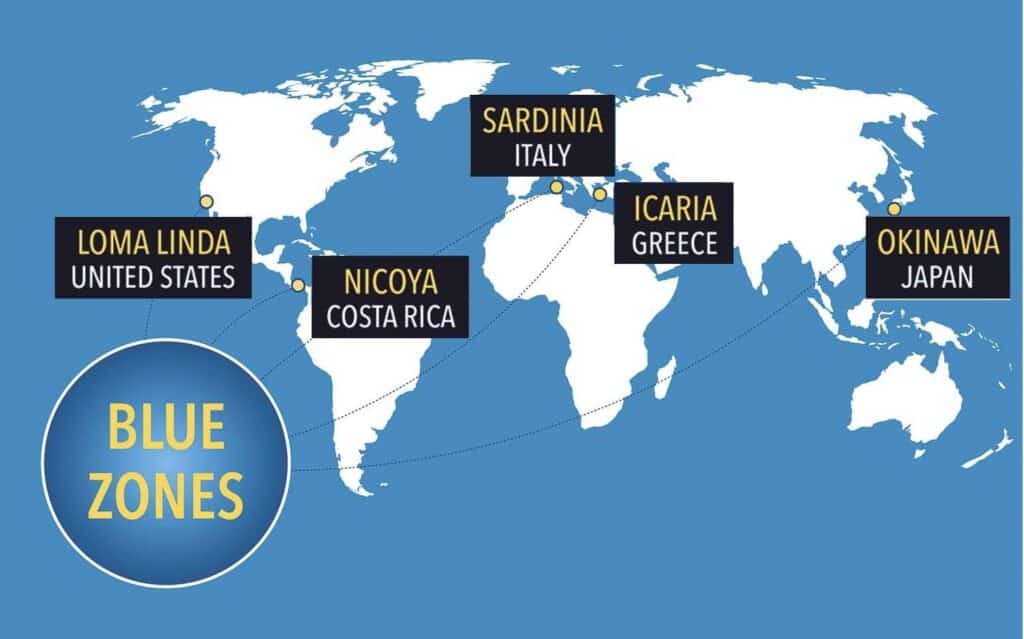
In the case of Okinawans, the pressure appears to be poverty: many of the pension claims were found to be fraudulent because the centenarians had actually died years ago.
So, before we decide to change countries and relocate our offices to Okinawa, for the wellbeing of our team, we would do a good job of putting on our critical thinking hat.
This example, helps us to see that AI (Artificial intelligence) alone may be insufficient for our internal audit data analytics. If we only give a limited dataset to the Artificial Intelligence LLM (Large Language Model), such as Claude or ChatGPT, it may give us the wrong conclusion that we should move to Okinawa.

For example, if we only give to the AI agent the data concerning SAP supplier movements that have the document KR, then our AI agent might give us the conclusion that all of our purchases without purchase orders are within the categories exempt from purchase order approval process.
However, if we understand what the AI used to do its analysis and we are able to have a critical mindset of the process, due to a strong grounding in how SAP works, then we can extend the data that we include for the AI to other document types.
Our conclusion may then be entirely different. Instead of concluding that the purchases without purchase order are compliant, we may get the conclusion that there are high-value purchases that do not follow internal control guidelines.
Just as Saul´s curiosity was raised by the statistics on poverty and their correlation to Blue Zone claims, which lead him to do deeper manual analysis of actual cases… internal audit – prompted by the initial risk indicator, may decide to do a more in-depth of purchasing and find examples of unauthorized purchases, or even fraud.
Just for information: https://allthatsinteresting.com/blue-zones-supercentenarians

Responses