Go from zero knowledge to the Python and AI hero your department needs — the standards, patterns and best practices for audit, controls, fraud detection and governance, in one reference you'll keep on your desk.
If I had this book three years ago, I'd have saved myself at least two years. We can ask ChatGPT and Claude anything — but armed with the knowledge in here, you know what to ask, you understand the answer faster, and you can spot the mistakes.
AI agents are only as good as we train them. Tell an AI to compare invoices against purchase orders and it'll flag the gap — but it won't know your system stores PO values without tax and invoices with tax. Train it wrong and you get confident nonsense. Rule-based analytics are predictable, cheap and easy to explain; AI analytics can surface risks you'd never have found. When you can run both, you get the best of each.
This book is your reference point: the Python patterns we actually use for the 300Framework. And if you manage a team doing the work, it'll help you guide them toward best practices — so your projects stay efficient, compliant and secure, and you can challenge cost, time and soon-to-be-obsolete software.
— Claire Worledge, author
WHAT'S INSIDE
What's inside the book
From zero set-up to ready-to-use code — the Python and AI patterns we actually use, in one reference.
01
Set-up, done from scratch
Get Python, VS Code and your whole environment running — even with zero prior coding knowledge. By the end you can read documents, analyse data and generate reports.
02
Project organization & best practices
Folder structures, config loading and naming conventions honed over 25 years of real data-analytics work. Every rule has a reason — and the book tells you the reason.
03
The ABC methodology & GitHub
A repeatable way to structure any analysis, plus version control with Git and GitHub so your work is traceable and your history is safe.
04
Python Lego blocks
The core building blocks and the most common functions and methods, explained for people who don't think of themselves as coders.
05
Ready-to-use code snippets
Over 100 pages of copy-paste-ready examples for real audit and analytics tasks — the 80% of Python that does the real work, in one place.
06
Turn your work into an intranet app
Use Streamlit to ship your Python project as a shareable internal web app your whole team can use — no front-end skills required.
Real Python you can copy and run
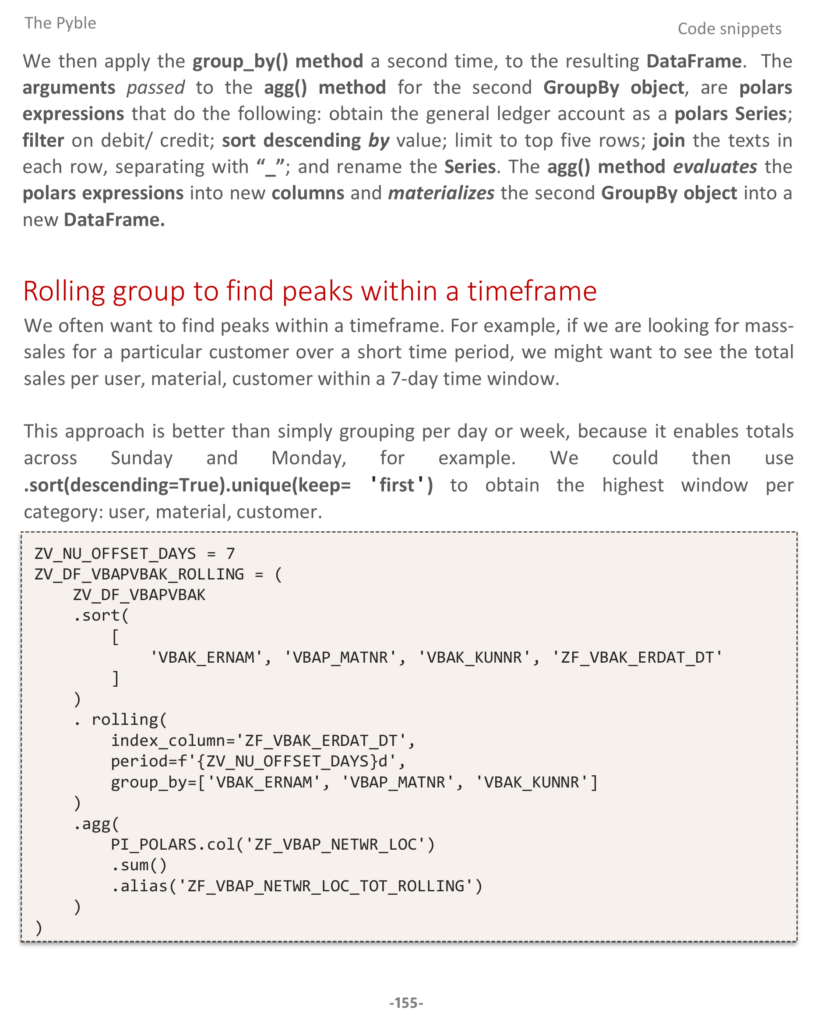
Every technique comes as working code, not pseudo-code or theory. This example builds a rolling time-window analysis in Polars to find peaks across any period — the kind of pattern you’ll lift straight into your own audit and analytics work. Over 100 pages of these snippets, ready to adapt.
A repeatable method for every analysis
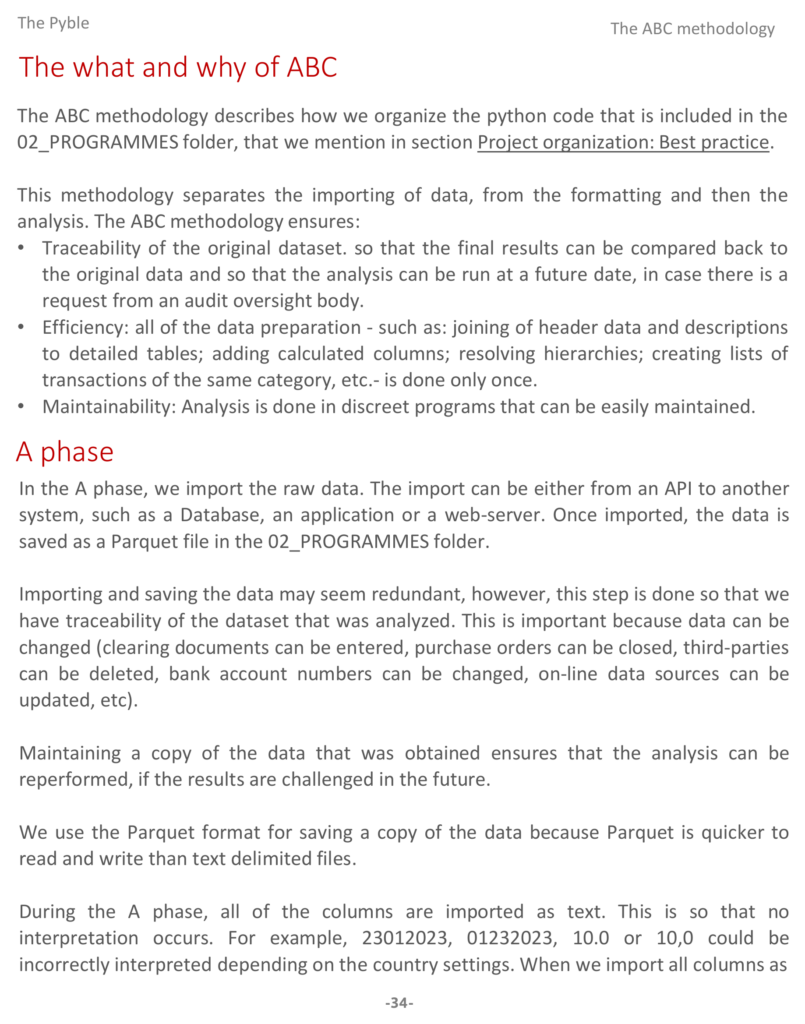
The ABC methodology separates importing, formatting and analysis into clean phases — so your work is traceable, efficient and easy to maintain. Raw data is preserved exactly as received, which means any result can be re-run and defended if an audit oversight body ever challenges it.
Turn your analysis into an internal app
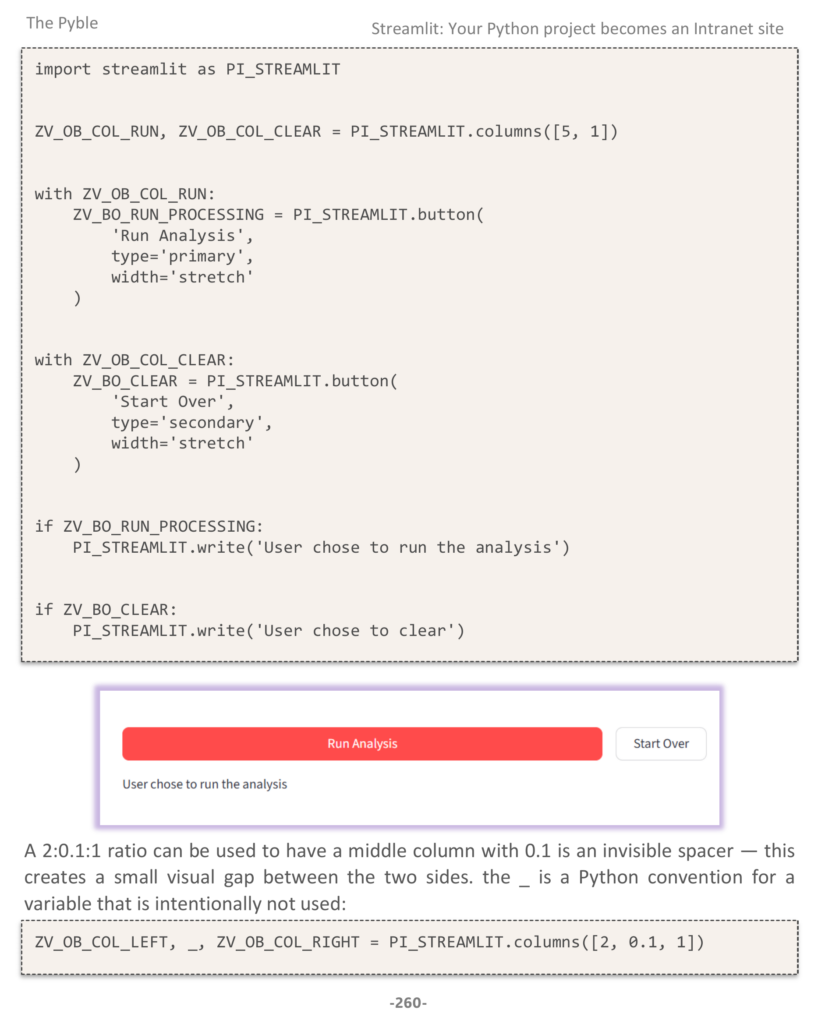
With Streamlit, your Python project becomes a shareable web app your whole team can use — buttons, inputs and live results, no front-end skills required. The book walks you through the layout and the code, so you can hand colleagues a real tool instead of a script.
Conventions that keep a team's code clean
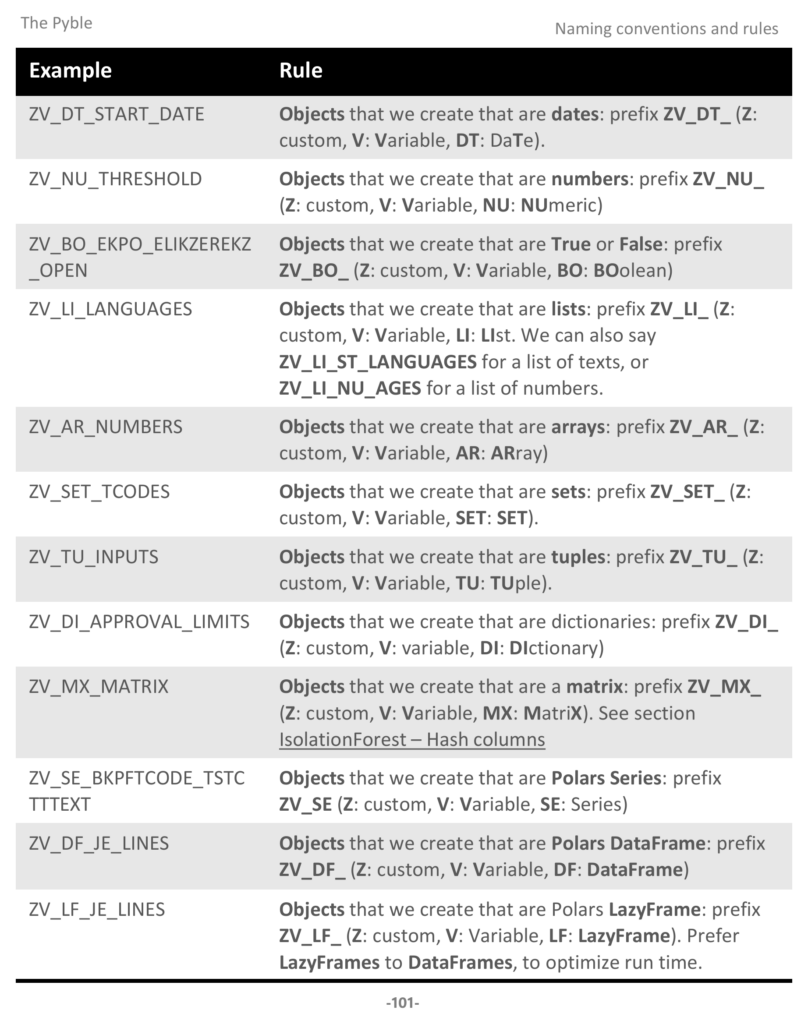
A consistent naming system — honed over 25 years — that tells you at a glance whether a variable is a date, a number, a list, a DataFrame or a dictionary. Readable, reviewable, easy to hand over, and AI tools work better against it too.
WHO IT'S FOR
Built for audit, controls and finance professionals
Whether you're learning Python from scratch or guiding a team that builds it for you, this book gives you the patterns, methods and best practices to do the work — and to review the work of others with confidence.
Auditors and controls professionals who need to review and audit Python and AI projects built by the business.
Finance and governance teams who want independent, rule-based checks before sending data to AI — for cost, speed and accuracy.
Team leads who want to set best-practice guidelines and train their people — and even train Claude or OpenAI to review the team's code.
Anyone starting from zero who wants the practical 80% of Python that gets real work done, without a computer-science detour.
MEET THE AUTHOR
Claire Worledge
Founder of 300Framework. 25 years in SAP audit and data analytics.
Claire has spent 25 years in SAP audit and data analytics for controls and governance — long enough to learn which patterns hold up under pressure and which quietly create risk. She founded 300Framework to put that experience in one place. The Pyble distils it into a single reference: the set-up, the conventions, the methodology and the ready-to-use code that let any professional do real Python and AI work — and review the work of others with confidence.
No. The book starts from a clean machine and walks you through installing and setting up everything you need. It’s written for professionals, not programmers — if you can use a spreadsheet, you can follow along.
How much is the book, and how does shipping work?
The Pyble is €41. Shipping is calculated at checkout based on your country. The book is printed on demand and shipped directly to you.
How long does delivery take?
Each book is printed to order especially for you, then shipped worldwide. Most international orders arrive within about three to four weeks. Occasionally customs can add a little time, and any import duties or taxes are set by your local customs office. We’ll get your copy on its way as soon as your order comes in.
What's the format?
A 352-page, full-colour physical book covering set-up, project organisation, the ABC methodology, GitHub, Python building blocks, over 100 pages of code snippets, Streamlit apps and useful libraries.
What if my book arrives damaged or gets lost?
If your book arrives damaged or defective, or if it doesn’t arrive at all, contact us within 30 days of the shipment date and we’ll arrange a free replacement. For international orders that haven’t arrived after 28 days, we’ll reorder and ship a new copy.
Can I order copies for my whole team?
Yes — contact Claire for multi-copy pricing and invoicing options.
Get your copy
The patterns, the methodology and the code — in one book you'll keep coming back to.